
Banteay Chhmar Temple
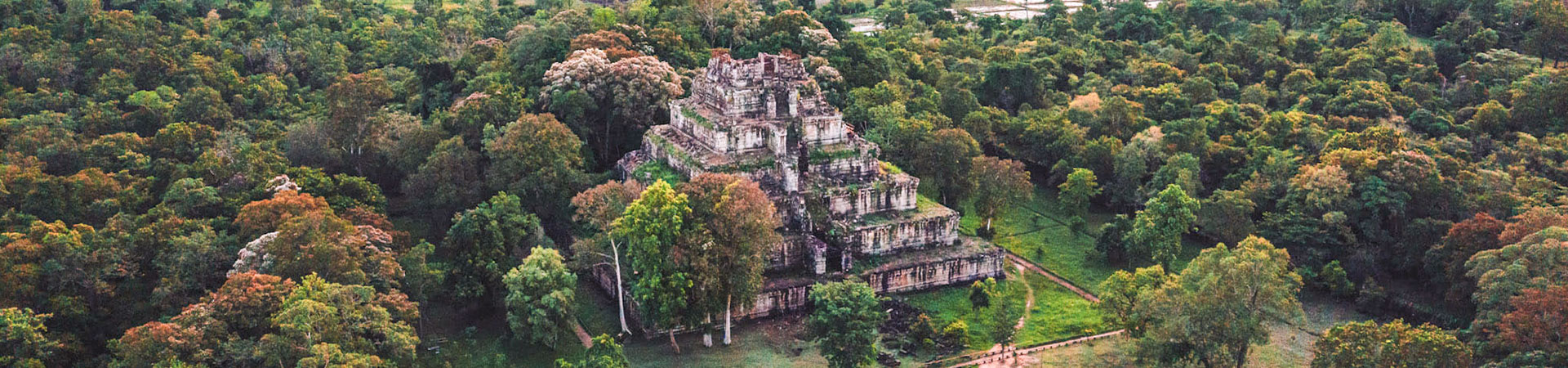
This enormous complex, which was a temple city, is one of the most intriguing in the Khmer empire, both for it's scale and it's remote location. Never excavated, Banteay Chhmar fits the picture of a lost Khmer city with its ruined face-towers, carvings, forest surroundings and bird life flying through the temple. It has a romantic and discovery feel to it.
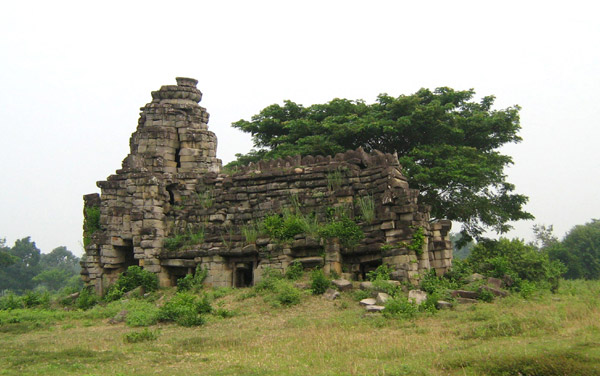 Banteay Chhmar dates from the late 12th to the early 13thcentury and it means Narrow Fortress. It is thought to have been built by Jayarvarman II. It was later rebuilt by Jayarvarman VII as a funerary temple for his sons and four generals who had been killed in a battle repelling a Cham invasion in 1177.
Like Preah Khan, Angkor Wat and Angkor Thom, Banteay Chhmar originally enclosed a city with the temple at the heart. No traces of the city that surrounded the temple remain.
The temple area covers 2km by 2 and a half km. It contains the main temple complex and a number of other religious structures and a baray to its east. A mote filled with water and a huge wall inside of that encloses the center of the temple. This mote is still used to present day by locals for fishing and daily chores. A bustling small market and village bounds the east and south east and perhaps there has been continuous habitation there since the founding of the temple.
Inside the mote, a stone rest house and chapel can be seen. The highlight of Banteay Chhmar is the bas-reliefs, which are comparable with the Bayon. They depict battle against the Chams, religious scenes and a host of daily activities. In parts, the outer wall has collapsed. On the west side a spectacular multi-armed Lekesvara can be seen. The temples central complex is a jumble of towers, galleries, vegetation and fallen stones. Beautiful carvings can be seen throughout.
Read more about Banteay Meanchey Province
More Articles on What To See
Angkor Complex
Phnom Penh City
Sihanoukville - Beach
Mondulkiri - Minority
Rattanakiri - EcoTourism
Kampot - Sea Foods
Kratie - Dolphin
Kampong Thom
Battambang
Preah Vihear
Kirirom Resort
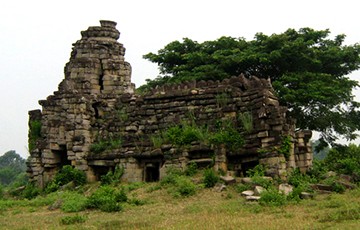
Banteay Chhmar Temple
Cambodia Tours

Cambodia Day Tours
Angkor Temple Tours
Cambodia Classic Tours

Promotion Tours
Adventure Tours
Cycling Tours
Trip Planner
Useful Links
Travel Services
News & Media

Agency offering information about Cambodia on tourism, culture, history, visa, attractions, province guides, trip planner, hotels, flights, cars, tours, news, photo and online bookings.
#262D, Monivong Blvd., Sangkat Beung Raing, Khan Daun Penh.Click here to contact us.