

Toul Sleng Museum S21
In 1975,Tuol Svay Prey High School was taken over by Pol Pot's security force and turned into a prison known as Security Prison 21 (S-21) It soon became the largest such centre of detention and torture in the country. Over 17,000 people held at S-21 were taken to the extermination camp at Choeung Ek to be executed; detainees who die during torture were buried in mass graves in the prison grounds.
S-21 has been turned into the Tuol Sleng Museum, which serves as a testament to the crimes of the Khmer Rough. The museum's entrance is on the western side of 113 Street just north of 350 Street, Phnom Penh.
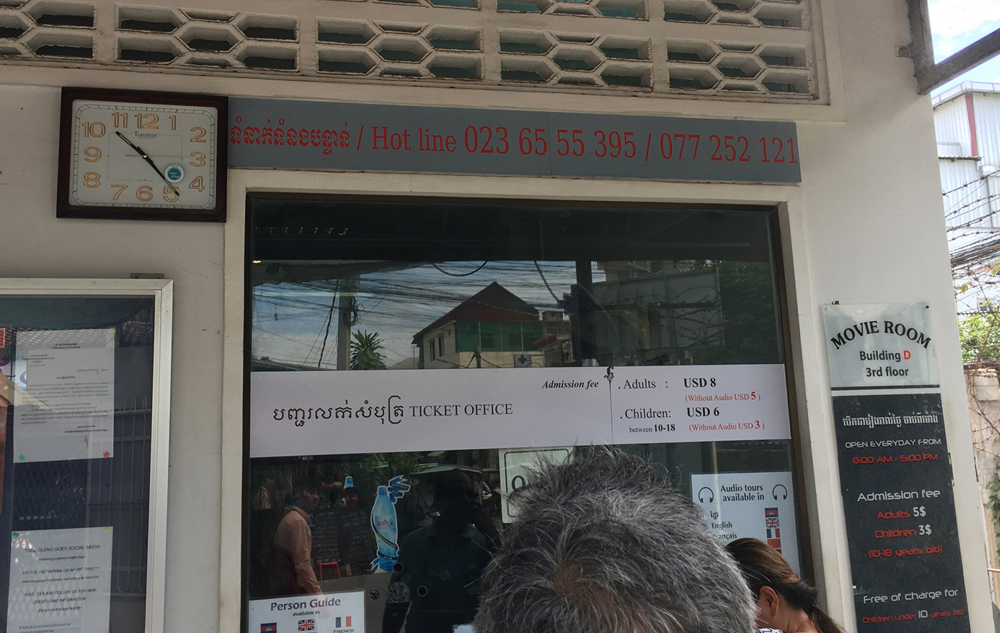
The museum open daily from 08.00 am to 5.00 pm; ticket entry is 5USD for adult, 3USD for child from 8-10 years old and free of charge for child under 10 years old. The Audio Tour of the Tuol Sleng Genocide Museum is available many languages such as Khmer, English, French, Deutsch, Chinese, Japanese, Korean, Vietnamese, Spanish, Italian and Netherlands and it charges 3USD/person.
Like the Nazis, the Khmer Rough was meticulous in keeping records of their barbarism. Each prisoner who passed through S-21 was photographed, sometimes before and after being tortured. The museum displays include room after room in which such photographs of men, women and children cover the walls from floor to ceiling; virtually all the people pictured were later killed. You can tell in what year a picture was taken by the style of number board that appears on the prisoner's chest. Several foreigners from Australia, France and the USA were held here before being murdered. Their documents are on display.
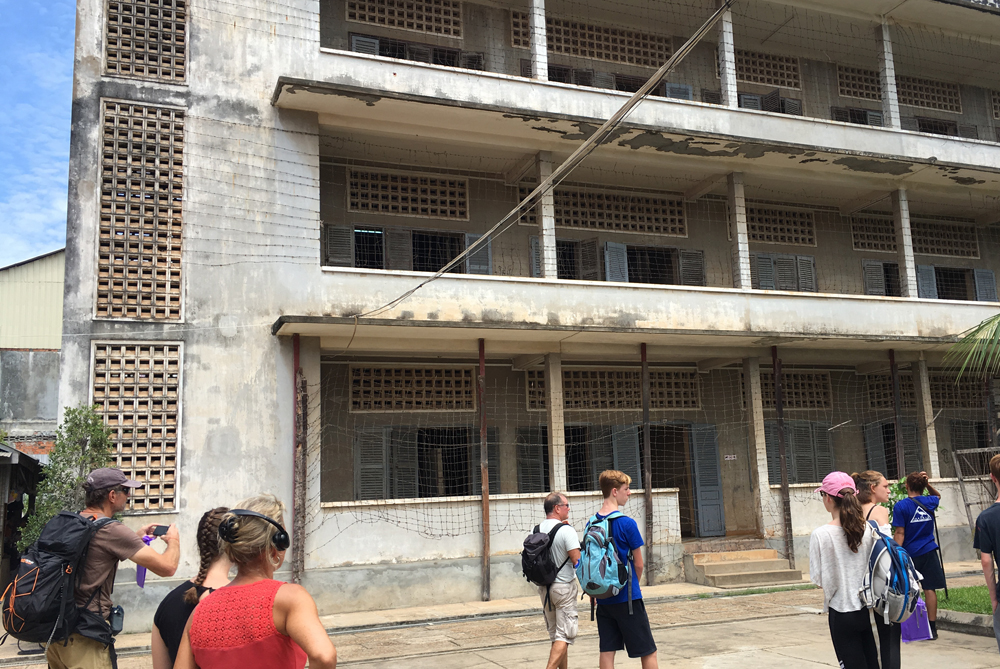
As the Khmer 'revolution' reached ever-greater heights of insanity, it began devouring its own children. Generations of tortures and executioners and were in turn killed by those who took their places. During the first part of 1977, S-21 claimed an average of 100 victims a day. When Phnom Penh was liberated by the Vietnamese army in early 1979, they found only seven prisoners alive at S-21. Fourteen others had been tortured to death as Vietnamese forces were closing in on the city. Photographs of their decomposing corpses were found. Their graves are nearby in the courtyard.
Altogether, a visit to Tuol Sleng is a profoundly depressing experience. There is something about the sheer ordinariness of the place that make it even more horrific; the suburban setting, the plain school buildings, the grassy playing area where several children kick around a ball, rusted beds, instruments of torture and wall after wall of harrowing black-and-white portraits conjure up images of humanity at its worst. Tuol Sleng is not for the squeamish.
Map of Tuol Sleng Genocide Museum
Related Articles...
National Musuem
Wat Phnom Hill
Toul Sleng Museum
Cheung Ek Killing Fields
More Articles on What To See
Angkor Complex
Phnom Penh City
Sihanoukville - Beach
Mondulkiri - Minority
Rattanakiri - EcoTourism
Kampot - Sea Foods
Kratie - Dolphin
Kampong Thom
Battambang
Preah Vihear
Kirirom Resort
Banteay Chhmar Temple
Cambodia Tours

Cambodia Day Tours

Angkor Temple Tours
Cambodia Classic Tours

Promotion Tours
Adventure Tours

Cycling Tours
Trip Planner
Useful Links
Travel Services
News & Media

Agency offering information about Cambodia on tourism, culture, history, visa, attractions, province guides, trip planner, hotels, flights, cars, tours, news, photo and online bookings.
#262D, Monivong Blvd., Sangkat Beung Raing, Khan Daun Penh.Click here to contact us.