

Phnom Krom - The mountain below
Prasat Phnom Krom is approximately 12 kilometers (7 .4 miles) southwest of Siem Reap near the north end of the Tonle Sap Lake. It is located on a mountain 137 meters (449 feet) highs. Climb the steep stairs and curved curved path through a modern temple complex at the top of the hill. The walk affords a fine view of the lake and surrounding area.
It was built in the end of the ninth century beginning of the tenth century dedicated to the Hindu Trinity- Siva, Visnu and Brahma, with following to Prasat Bakheng art style.
BACKGROUND
Yasovarman I built a temple on each of the three hills dominating the plain of Angkor, Bakheng, Phnom Krom and Phnom Bok. The temple of Phnom Krom is visible from the airplane as one fly into Siem Reap.
LAYOUT
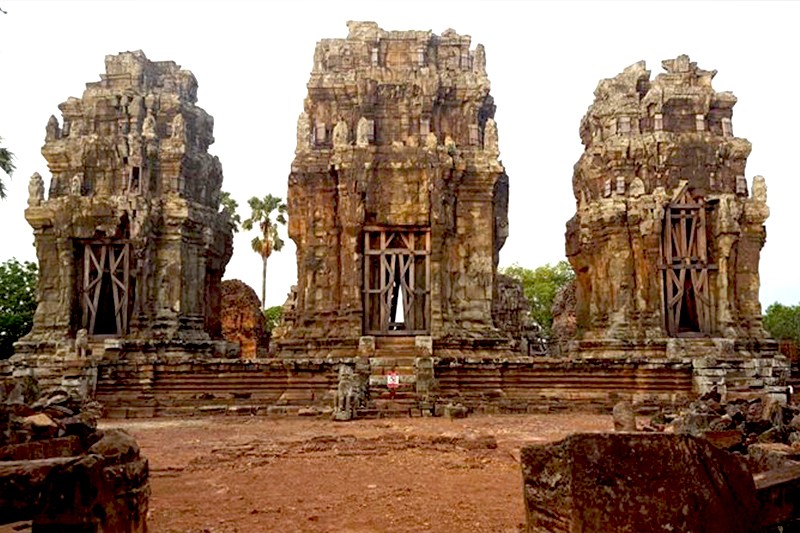
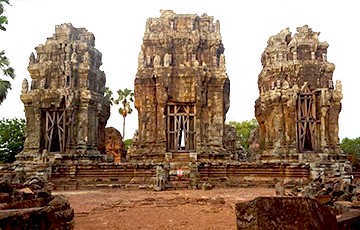
Phnom Krom is a square plan and consists of three towers in a row situated dramatically on a hilltop. They were dedicated to Siva, Visnu and Brahma respectively.
The upper portions of the towers have collapsed and the facades are very degraded but otherwise they remain intact. The towers are enclosed by a literate wall intersected on each side by an entry tower in the shape of a cross.
Three long halls built of laterite (only the bases of which remain) parallel the wall around the courtyard. They probably served as rest houses. Four small building inside the courtyard preceded the sanctuaries. They are similar except that the two at either end are brick and the two in the middle are sandstone. All four have a series of holes in the walls, which suggests they may have been used as crematoriums.
CENTRAL TOWERS
The three central towers stand on a north south axis on a low rectangular platform with molding constructed of sandstone paving over a laterite base. Two sides of the base are intercepted by three stairways with lions on the landings. The towers are square and originally had four recessed tiers on the upper portion. they open to the east and west with false doors on the north south. Traces of decoration remain around the base of the platform near the stairs, on the pilasters, the panels of the false doors, the cornices and on niches in the corners. The upper terrace affords a panoramic view of the Great Lake and the surrounding plain.
Related Articles...
Angkor Wat
Ak Yum
Angkor Thom
Bakheng Mountain
Bakong
Baksei Chamkrong
Banteay Srei
Banteay Kdei
Banteay Samre
Baphuon
Bayon Temple
Beng Mealea
Chau Say Tevoda
East Mebon
Kravan
Krol Ko
Lo Lei
Neak Pean
Phimean Akas
Phnom Krom
Pre Rub
Preah Khan
Preah Ko
Preah Palilay
Preah Pithu
Roluos Group
Sour Prat
Spean Thmar
Srah Srang
Ta Keo
Ta Prohm - Jungle Temple
Ta Som
Tep Pranam
Terrace of Elephants
Terrace of Leper King
Thommanon
West Baray
West Mebon
Chapel of the Hospital
Kbal Spean
Phnom Kulen
More Articles on What To See
Angkor Complex
Phnom Penh City
Sihanoukville - Beach
Mondulkiri - Minority
Rattanakiri - EcoTourism
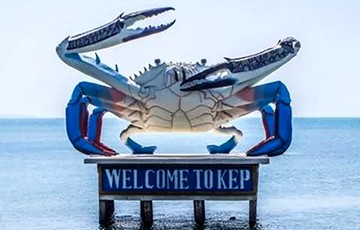
Kampot - Sea Foods
Kratie - Dolphin
Kampong Thom
Battambang
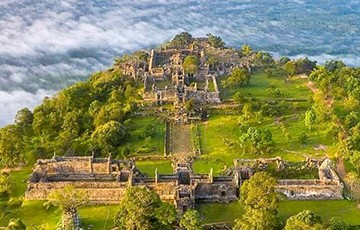
Preah Vihear
Kirirom Resort
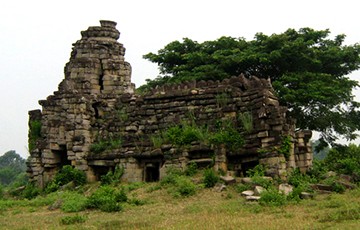
Banteay Chhmar Temple
Cambodia Tours

Cambodia Day Tours
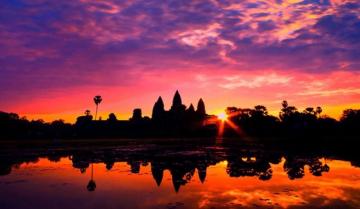
Angkor Temple Tours
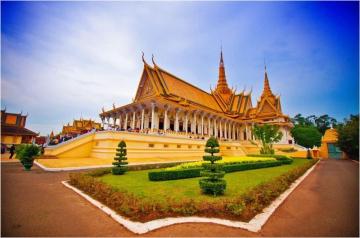
Cambodia Classic Tours
Promotion Tours
Adventure Tours
Cycling Tours
Trip Planner
Useful Links
Travel Services
News & Media

Agency offering information about Cambodia on tourism, culture, history, visa, attractions, province guides, trip planner, hotels, flights, cars, tours, news, photo and online bookings.
#262D, Monivong Blvd., Sangkat Beung Raing, Khan Daun Penh.Click here to contact us.