
Vietnam’s ‘crazy’ growth keeps hotel investors guessing
16 May 2018
While hotel investors do not believe that the bubble will burst for Vietnam despite an imminent 43 per cent increase in the number of room keys – a whopping 35,000 additional keys, according to STR Global – they do believe its popular tourist areas will be ruined unless proper planning and development is implemented.
“Phu Quoc is a Boracay in the making,” declared Kenneth Atkinson, executive chairman, Grant Thorton Vietnam, “because there is no solid waste management at all. You’ve got 17,500 hotel rooms in three- to five-star (categories) – that’s more than Sydney has. You have an airport with a capacity for 2.5 million people a year. There are 100,000 inhabitants on the island and you’re going to need at least 25,000-30,000 people to work in hotels alone. So (there are) serious labour shortage and infrastructure problems, particularly waste management, which is becoming a serious issue on the island.”
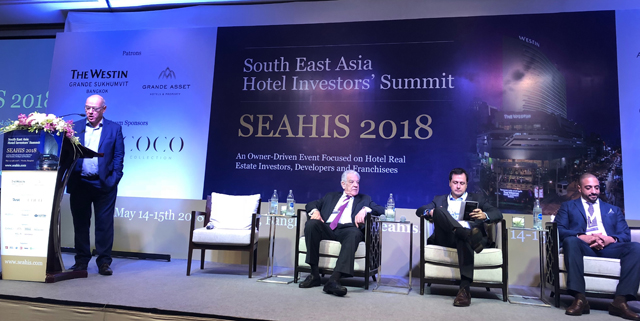
Atkinson was on a panel at the just-concluded South-east Asia Hotel Investors’ Summit in Bangkok, where moderator David Keen, CEO of Quo Global, raised his worries about Vietnam’s “crazy” growth and found Halong Bay, which he had visited several times in the last few months “hideous, frankly”.
“If we look at Phu Quoc, Ho Tram, Danang, Hoi An, there is little planning ahead. What’s going to happen to these gorgeous destinations?” Keen asked.
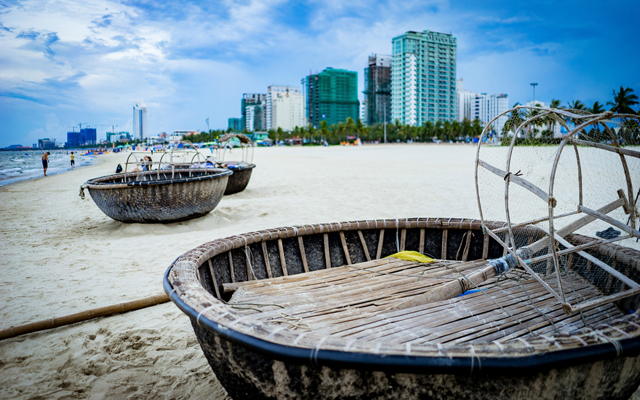
In Danang, real estate developers are competing to build taller and larger skyscrapers. The local media reported that in the near future, the tallest building in the central region would be in the city. Developed by PPC An Thinh Da Nang, the complex will cover an area of 2.2ha and include four 50-57-storey towers.
In Hoi An, a UNESCO World Heritage Site just 60km2 in size, Atkinson who visited six months ago found the number of visitors and tourist buses “horrifying”.
Michael Piro, COO of Indochina Capital, who is “bullish” on Vietnam with the launch of a new select service, millennials-focused brand targeting the domestic market, Wink Hotels, admitted to his “fair share of concerns about the lack of vision in the development of these areas”.
He said: “Vietnam is very blessed from a geographical perspective. It’s a shame to see it get washed up in development, excitement and greed.
“The big risk we carry is the areas become too rundown, with not enough care to maintain what people come to see. We really need to band together to ensure that the government hear from us, and now we have the Boracay (cleanup) as an example.”
Gonzalo Meceda, vice president development of Melia Hotels International, said he and his company were also worried about a “lack of planning” in the country. “I don’t think Danang is a place where it makes sense to build a 50-60-storey buildings. Hoi An is next to it, so that’s the next one. Phu Quoc – there is still time to save it; the government should focus on that,” he said.
How it got this way
The panel spotlighted key reasons how Vietnam got this way, including arrivals demographics that comprised big-volume markets China and South Korea and, ironically, a private sector that had taken on the mantle of marketing Vietnam aggressively and even got involved in making it more accessible to visitors in order to fill its rooms.
The figures speak for themselves.
It took Vietnam only eight years to get to 13 million arrivals (2017 over 2016), compared to Thailand, which took 25 years to get from six million to 15 million, Atkinson pointed out. But, more than half of the 13 million were group travel, with the top four Asian markets comprising by far China, followed by South Korea, Japan and Taiwan.
Even if the government had increased the marketing budget from US$1 million to US$5 million, as Atkinson asserted, this paled in comparison to Thailand’s US$100 million or Malaysia’s US$80 million marketing spend. This saw the private sector stepping in to be the destination marketeer, and continuing to, in order to protect its own investments.
Sponsored News
More World Travel News
Cambodia Tours

Cambodia Day Tours

Angkor Temple Tours
Cambodia Classic Tours
Promotion Tours
Adventure Tours

Cycling Tours
Trip Planner
Useful Links
Travel Services
News & Media

Agency offering information about Cambodia on tourism, culture, history, visa, attractions, province guides, trip planner, hotels, flights, cars, tours, news, photo and online bookings.
#262D, Monivong Blvd., Sangkat Beung Raing, Khan Daun Penh.Click here to contact us.